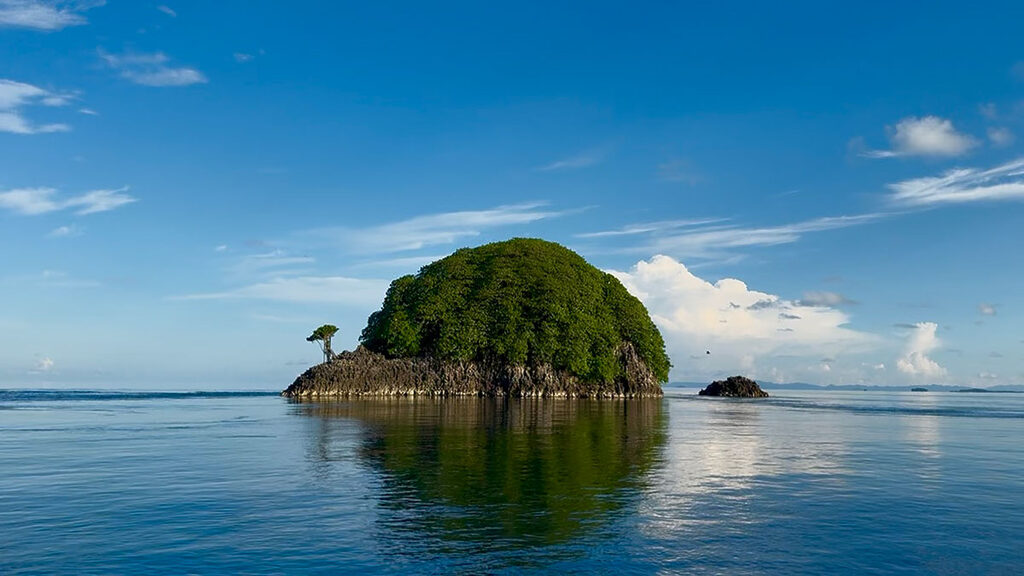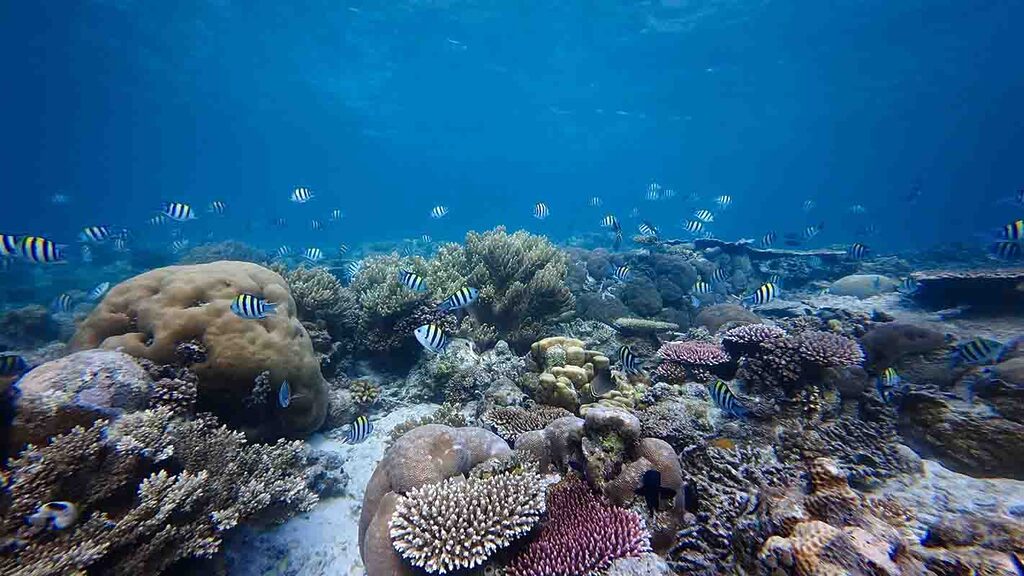
Freediving Raja Ampat is one of those experiences that remind you how beautiful the ocean can be. If there’s one place on this planet that still feels untouched — truly wild, impossibly colorful, and alive in every direction — it’s Raja Ampat.
Sitting in the heart of the Coral Triangle, this archipelago of more than 1,500 islands is known as The Four Kings: Waigeo, Batanta, Salawati, and Misool. And after spending a week here on the Sea Safari Cruises liveaboard, I finally understand why divers from all around the world dream about this place.
A Place the Ocean Protects
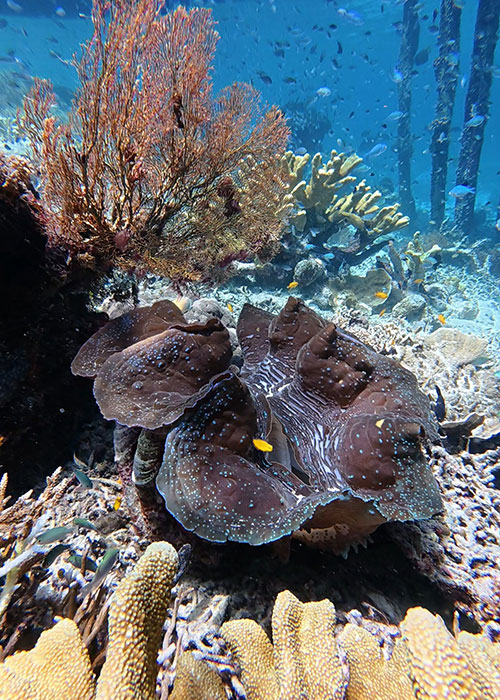
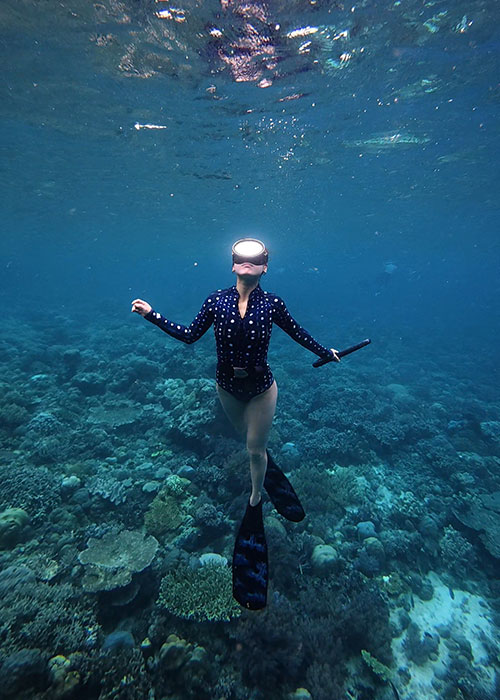
Raja Ampat sits deep in Indonesia’s West Papua, hidden away behind long travel hours and a stretch of jungle-covered islands that barely look real from above. The locals call these islands The Four Kings — Waigeo, Batanta, Salawati, and Misool — but it’s the ocean around them that wears the crown.
This region holds the highest marine biodiversity on the planet.
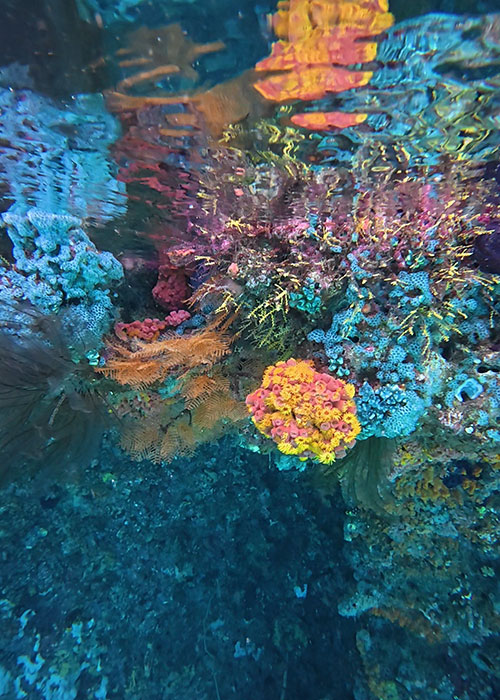
Corals grow here the way forests grow on land.
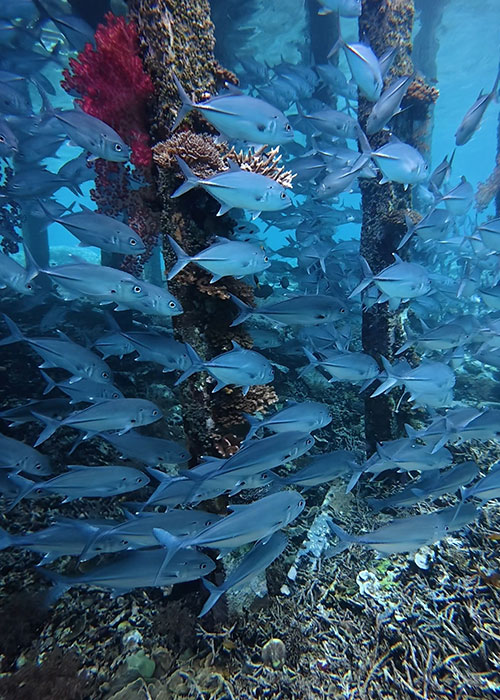
Fish move in layers, like they’re stacked on top of each other.
And the reefs… the reefs feel ancient, untouched, and alive in a way that’s becoming rare.
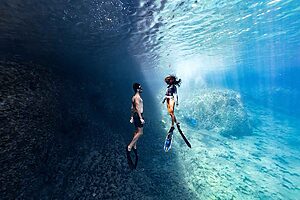
As a freediver, you drop into water that looks like it’s been colored by someone’s imagination — emerald bays, clear blue channels, soft coral gardens that move like silk.
Seven Days Living at Sea
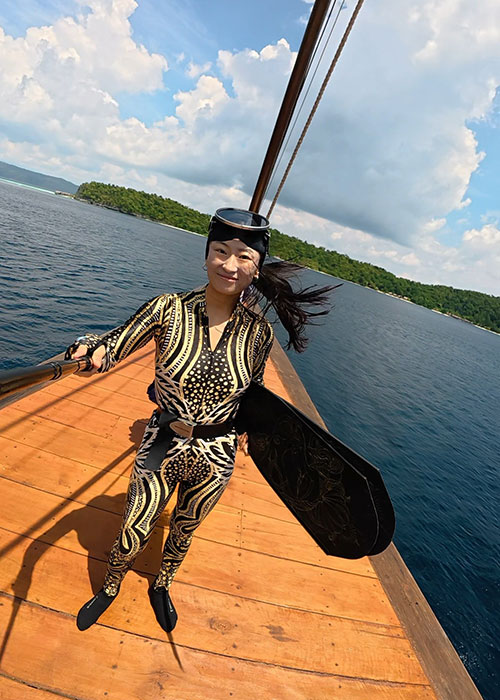
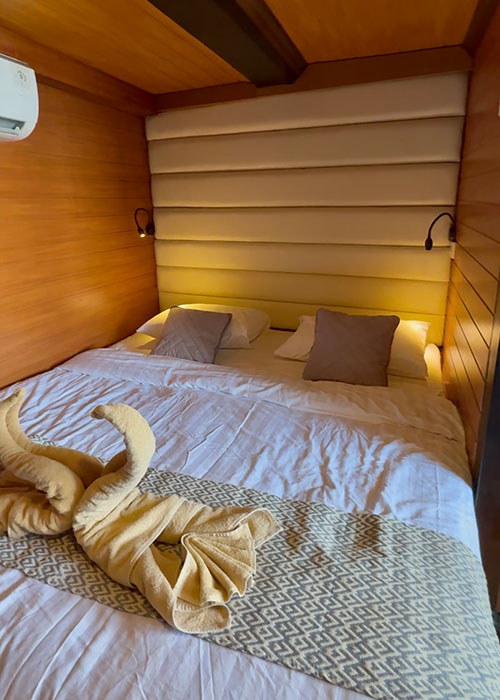
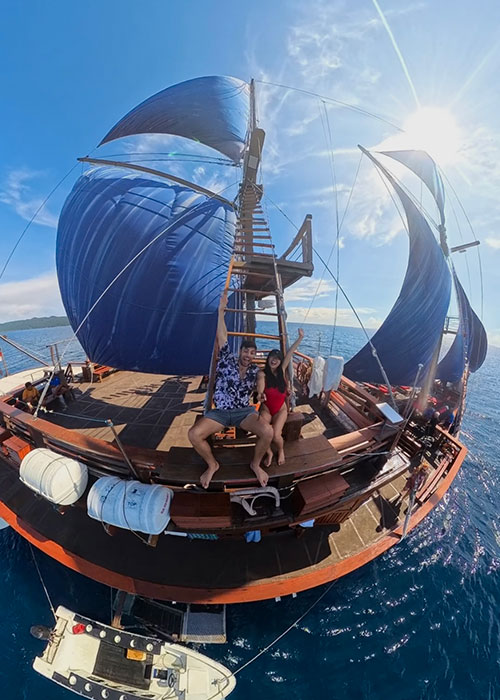
Life on the liveaboard quickly fell into a rhythm that felt both simple and strangely addictive. We spent our week with Sea Safari Cruises exploring Central Raja Ampat, moving between its small islands, channels, and famous reef sites.
Every morning started with a wake-up call around 6 a.m., just enough time to pull on a wetsuit, grab a quick coffee, and be ready to dive by 7. The crew would take us by tender to the day’s first site — sometimes the freedivers and scuba divers entered in slightly different spots depending on the currents, all planned carefully during the briefing the night before.
Everything on board was organized so smoothly that you never had to think about anything. The only real responsibility you had was to put on your fins and get in the water. After the first dive came breakfast, then another dive, then lunch, another dive, snacks, a sunset or night dive, dinner, and finally the plan for the next day. It sounds like a lot, but somehow it never felt rushed. The ocean set the pace, and you just followed it.
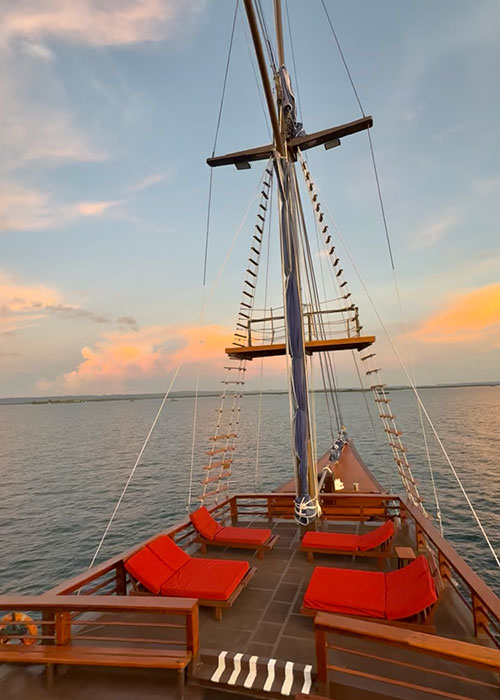
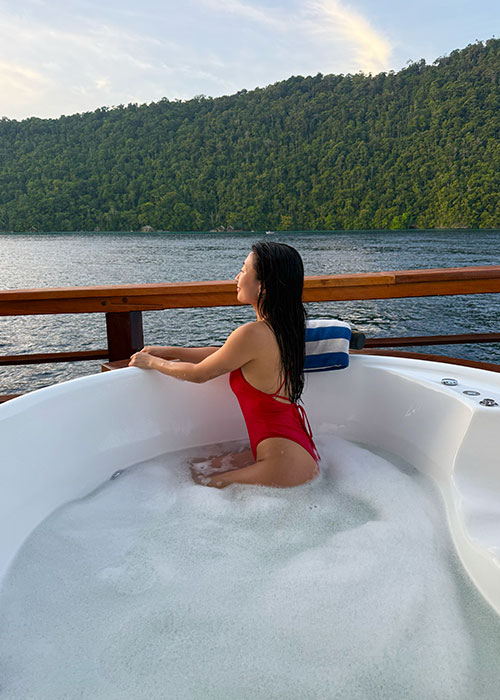
We especially loved the food and the hot tub on the boat. Every meal was freshly prepared — whether you’re vegan, vegetarian, or eat everything, there was always something delicious waiting, plus plenty of fresh fruit throughout the day. They served a mix of local Indonesian dishes as well as Chinese-influenced food, so every meal felt comforting and familiar in its own way. One evening we spent sunset soaking in the hot tub while the sky turned orange and the islands passed slowly by. It was such a peaceful moment that it almost didn’t feel real.
There’s something almost unreal about living like that for a week. No emails, no traffic, no rushing from one responsibility to the next. Instead of deadlines and everyday stress, your only “schedule” is the ocean — wake up, dive, eat, rest, dive again. Life shrinks down to the essentials: sunlight, saltwater, good food, and the feeling of slipping into the sea several times a day. By the end of the trip, you start wondering why real life can’t be this simple. The routine is so natural and calming that a part of you wants to bring it home with you.
A Freediver’s Version of Raja Ampat
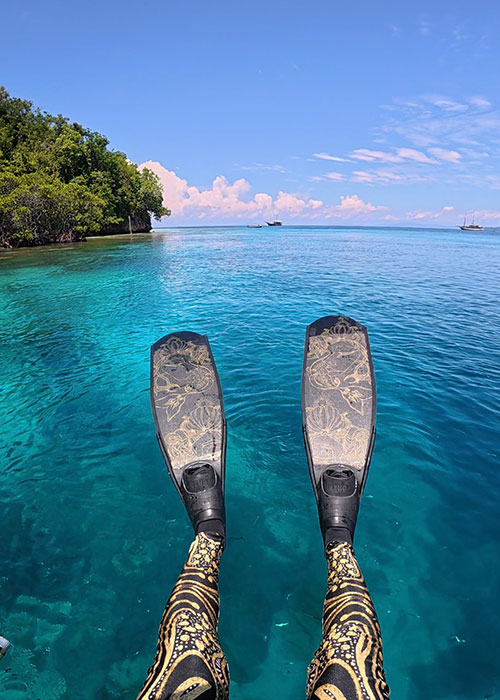
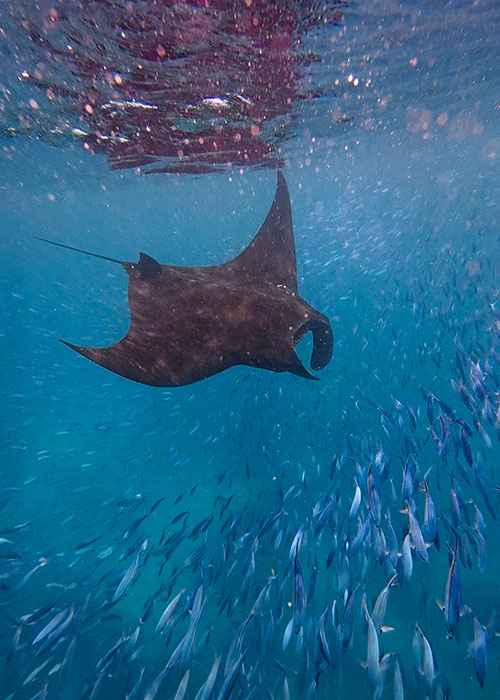
Freediving here is not like freediving anywhere else. It’s not just the clarity of the water or the insane colors of the reef — it’s the density of life. At every site, something is happening. Fish aren’t scattered; they’re gathered in huge layers that move in sync. Corals don’t form patches; they grow into massive gardens that look like underwater cities.
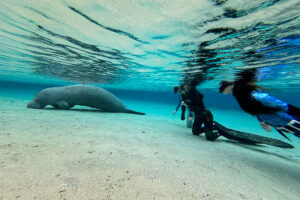
As a freediver, these are some of the iconic animals you can encounter in Raja Ampat:
- Reef mantas & oceanic mantas
- Blacktip and whitetip reef sharks
- Wobbegong carpet sharks
- Walking/epaulette sharks
- Green and hawksbill turtles
- Giant bumphead parrotfish
- Schools of barracuda
- Dugongs
- Pygmy seahorses
- Blue-ringed octopus
Because the underwater world is so colorful here, Raja Ampat becomes an incredible playground for underwater shots. You can easily spend hours with your camera, trying different angles and video ideas, and the whole place feels like the ocean turned up to maximum volume.
The Water Temperature in Raja Ampat and the Freediving Gear You’ll Need
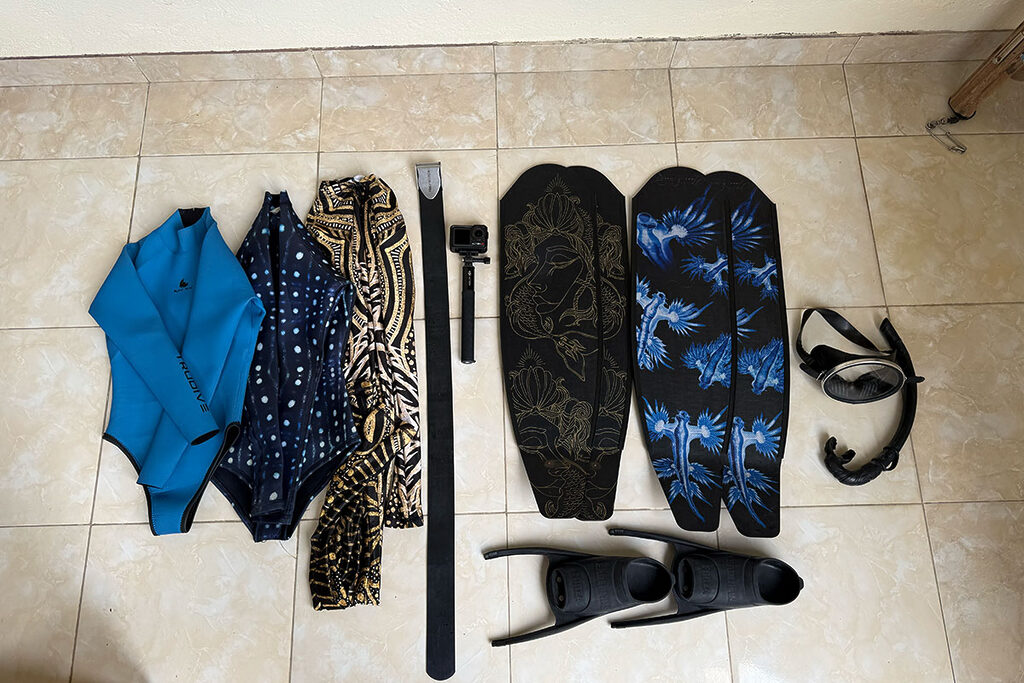
The water temperature usually sits around 28–30°C (82–86°F), which is warm enough that you don’t really need a thick wetsuit — even for night dives. Most days felt comfortable with just a thin suit or even just a protective skin.
Here’s what I brought for this trip, and everything worked perfectly for the warm conditions in Raja Ampat:
- 50+ UPF full-body Sundara suit for sun protection and surface sessions
- 2mm Slipins Whale Shark springsuit
- 2mm Trudive springsuit
- DiveR fins – Blue Dragon and Sea Goddess
- Beuchat oval mask + snorkel
- Weight belt: I used 2 kg with a 2mm springsuit, and 1 kg when wearing the full-body Slipins suit
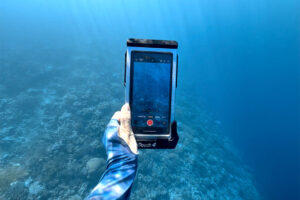
- Camera: DJI Osmo Action 5 Pro
I always recommend bringing your own freediving gear because well-fitting equipment makes such a difference in the water. But if you forget something or prefer not to travel with a full setup, you can rent gear on the liveaboard as well — just let the crew know in advance so they can prepare everything for you.
If you love freediving Raja Ampat, you’ll quickly understand why so many ocean lovers call this region one of the best freediving destinations in the world.
How to Get to Raja Ampat
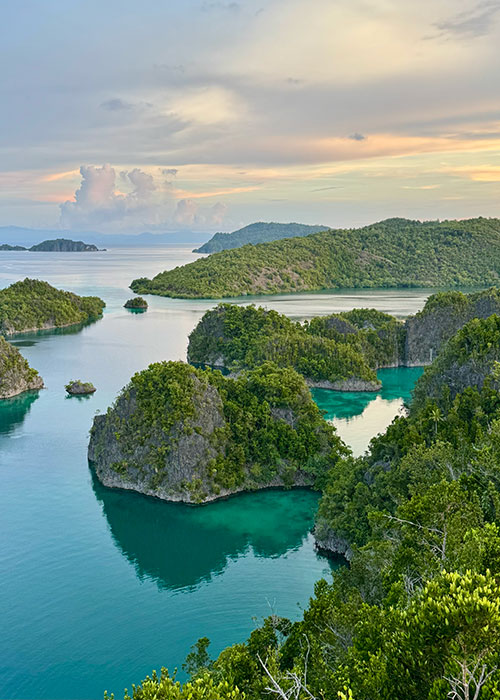
Reaching a place that looks this remote is easier than people imagine, but the journey can be long. Many flights to Sorong are red-eyes, arriving around 6 a.m., and most liveaboards pick you up around 8 a.m. straight from the airport. You can fly into Sorong from several major Indonesian hubs — Jakarta, Bali (Denpasar), Makassar, Manado, and sometimes Surabaya depending on the season. Most international travelers connect through Jakarta or Bali before continuing on to West Papua.
We flew from Tokyo, and after a full night of travel, we knew we’d be too tired to jump directly onto the boat. So we added an extra rest day before boarding — one of the best decisions we made.
We stayed at Swiss-Belhotel Sorong, which turned out to be exactly what we needed: comfortable beds, soft mattresses, quiet rooms, and the perfect reset after hours in transit. By the time the liveaboard crew came to pick us up the next morning, we felt refreshed and ready for the week ahead.
Wrapping Up the Experience
Whether you choose to stay on land or join a liveaboard, Raja Ampat will give you a kind of experience that feels almost impossible to recreate anywhere else. Every island, every reef, every dive has its own character — and somehow, each day feels better than the one before. This is a place that welcomes both scuba divers and freedivers with the same magic: warm water, huge reefs, and a sense of peace that stays with you long after you’ve left.
I’m truly grateful I got to make this trip happen for myself. Spending a week living on the ocean, diving several times a day, and moving slowly through one of the most beautiful marine environments on the planet was something I’ll carry with me for a long time. Raja Ampat is more than just a destination — it’s a reminder of how wild, colorful, and alive the world can still be.